Music at Tallinn Fringe 2026: Beyond the Concert
From classical piano and jazz to electronic experiments and an orchestra of cars, explore the diverse musical world of Tallinn Fringe 2026.
What exactly makes a concert a concert? Is it the musicians on stage, the audience sitting quietly, or simply the act of listening? Across 31 days, from 18 August to 18 September 2026, Tallinn Fringe Festival offered several different answers to these questions. Classical music, jazz, electronic experimentation, blues, interdisciplinary performances and unconventional musical experiences shared the same festival, often crossing the boundaries between music, theatre, dance and visual art.
Unlike traditional music festivals that concentrate on a particular genre or artistic direction, Tallinn Fringe follows an open-access model, giving artists the freedom to present their work in different forms. The result was a programme where a piano recital inspired by Dante could exist alongside a jazz quartet, a performance involving automobiles as instruments, or an evening where wine tasting became part of the musical experience. Music was not simply something to listen to; it was also something to watch, experience and sometimes participate in.
Classical Music Beyond the Recital Hall#
Classical music held an interesting place in the 2026 programme, particularly through performances that connected instrumental music with literature, mythology and movement.
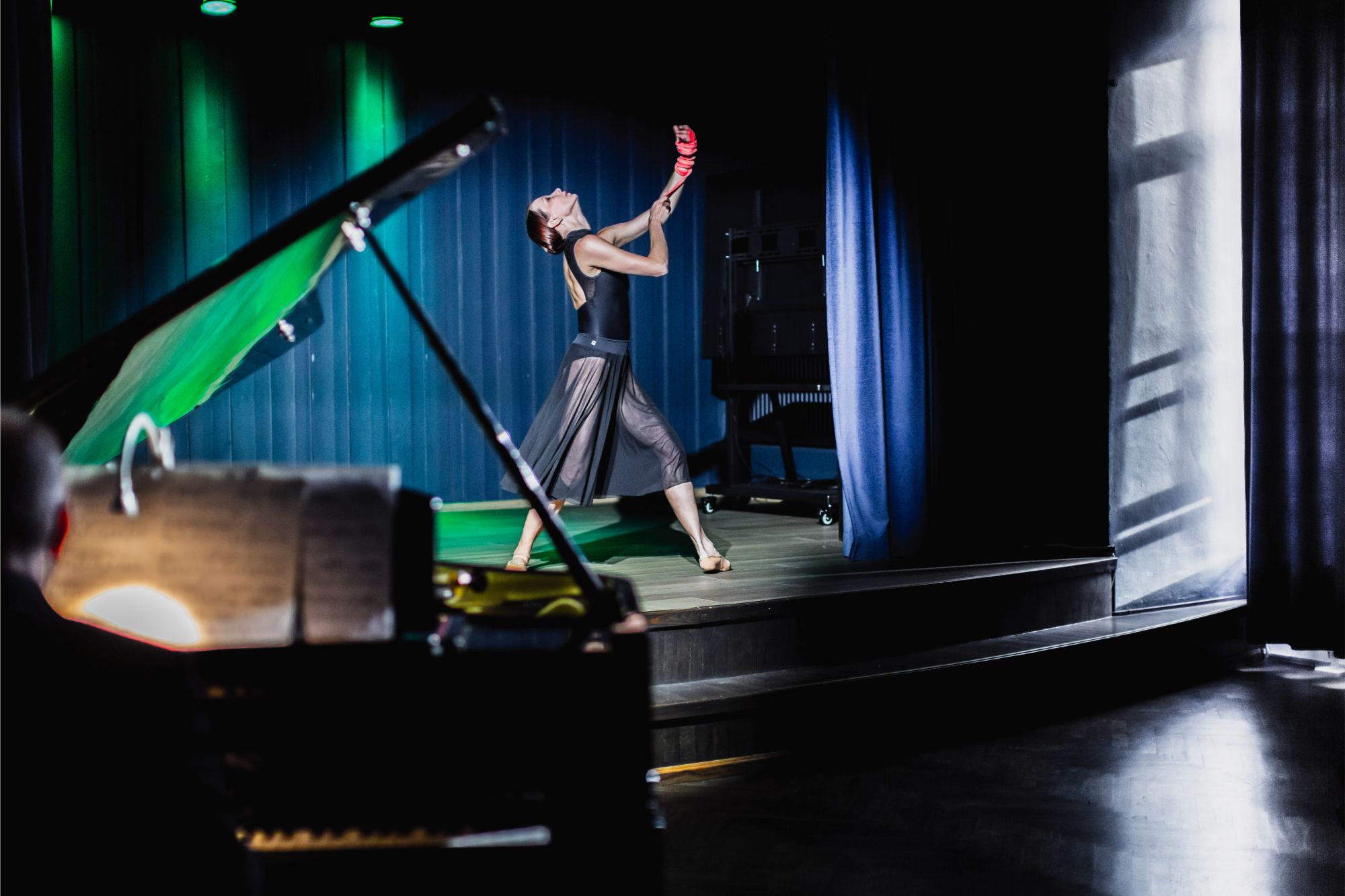
One example was Erik Satie: Gnossiennes, Piano & Ballet, performed by pianist Matteo Ramon Arevalos and ballerina Triinu Upkin at the Estonian Theatre and Music Museum on 4 September. Rather than presenting Satie's seven Gnossiennes as a conventional piano recital, the production combined them with selections from Arevalos' La Folia, creating a theatrical journey inspired by the Greek myth of Ariadne and her labyrinth. Narration written by Arashk Azizi provided the conceptual framework, while the ballet transformed the music's psychological and emotional dimensions into movement.
The programme also featured Dante: Divine Sonata, a solo piano performance by composer and pianist Arashk Azizi, inspired by Dante Alighieri's Divine Comedy. Originally premiered in Ravenna, near Dante's tomb, the three-movement sonata follows a journey through Inferno, Purgatorio and Paradiso. Its performance at the museum's historic Peeter Süda Hall on 11 September brought together contemporary composition, literary storytelling and the traditions of classical piano music.
These performances approached classical music not merely as repertoire to be reproduced but as a means of storytelling. Literature and mythology provided the narrative foundations, while sound, movement and musical structure gave those stories new forms of expression.
Jazz, Blues and Musical Conversations#
Elsewhere, the programme moved towards the improvisational and expressive traditions of jazz and blues.
At Philly Joe's Jazz Club, the Greta & Tanel Ruben Quartet presented a meeting between two generations of Estonian musicians. Drummer and composer Tanel Ruben, an established figure in Estonian jazz, shared the stage with his daughter Greta Ruben, a violinist, singer and composer whose musical background crosses jazz, classical music, folk and pop. Joined by pianist Eskil Roos and bassist Karl Tammaru, the quartet explored original compositions from both generations, bringing different musical experiences into a common language.
Blues found its place in the festival through Kaisa Ling Thing, which performed as part of Sumedad suveõhtud Lingu Kaisa aias. Kaisa Ling also appeared throughout the wider festival environment, where music frequently crossed into cabaret, storytelling and comedy. Together with pianist Rene Paul Allkivi, she brought musical performance into the informal, late-night atmosphere of Heldeke!, where the boundaries between concert and variety entertainment were deliberately flexible.
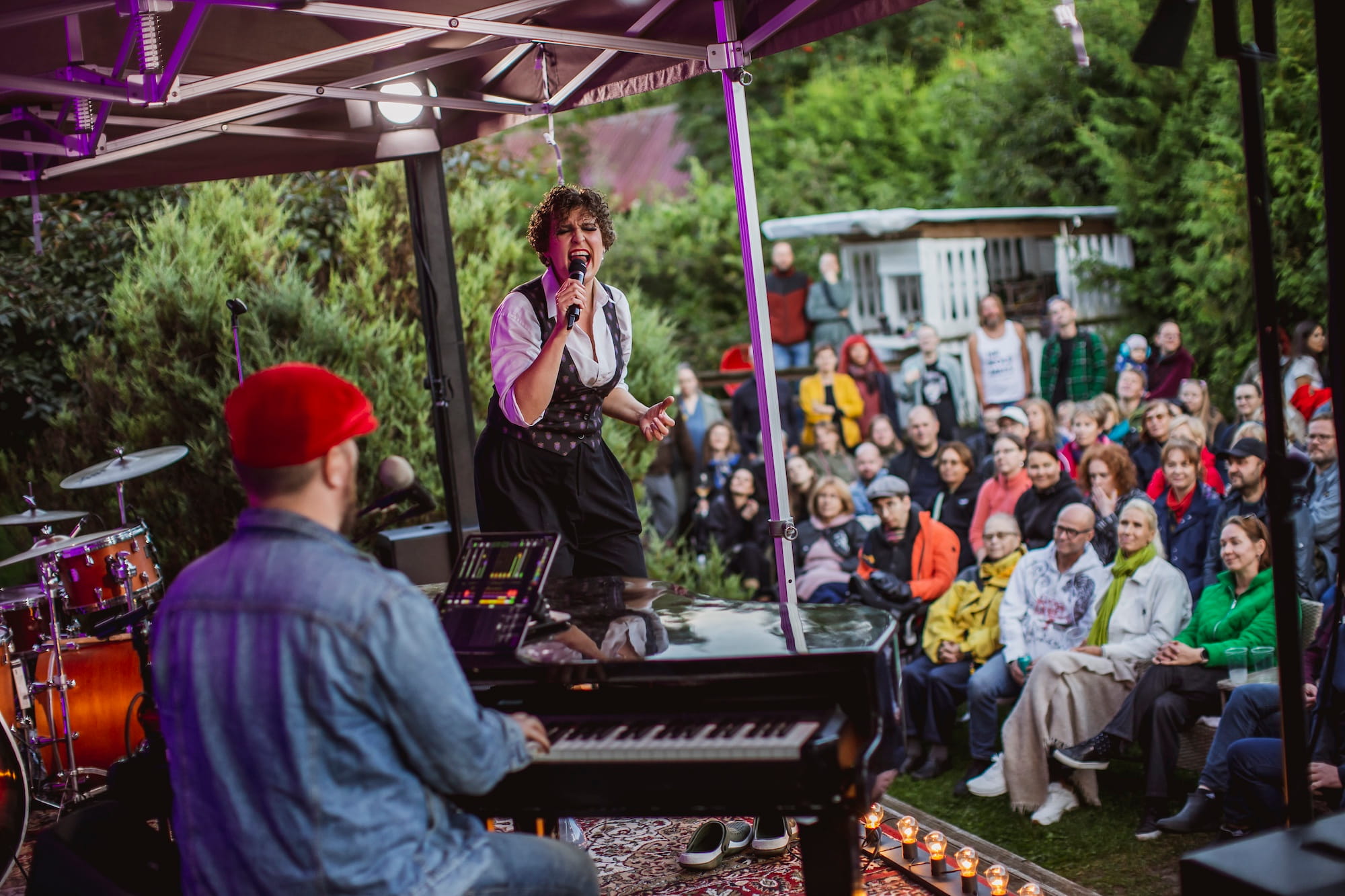
These performances illustrated another aspect of the music programme. Music did not always need a dramatic concept or an unusual instrument to become a Fringe experience. Sometimes the interaction between musicians, the spontaneity of improvisation and the atmosphere of a small venue were enough to create something distinctive.
When Electronic Music Meets Visual Art#
For those interested in contemporary experimentation, Tallinn Fringe 2026 also offered performances that approached music through technology and visual expression.
Neuropa: Where Sound Becomes Vision, presented on 2 September at Ratas & Kohv, brought together electronic musician Paolo F. Bragaglia and visual artist Marco Bragaglia. The performance combined a live electronic set with painting created in real time, allowing sound and image to develop simultaneously. Rather than using visuals simply as decoration, the project explored the relationship between what the audience heard and what it saw.
A related exploration appeared in Synusonde: Sound of the Zodiacs, featuring pianist Matteo Ramon Arevalos, electronic musician Paolo F. Bragaglia and visual artist Marco Bragaglia. Presented at Heldeke! on 5 September, the project drew inspiration from the twelve signs of the zodiac, combining piano, electronics and visual elements to create a musical interpretation of symbolic and astrological imagery.
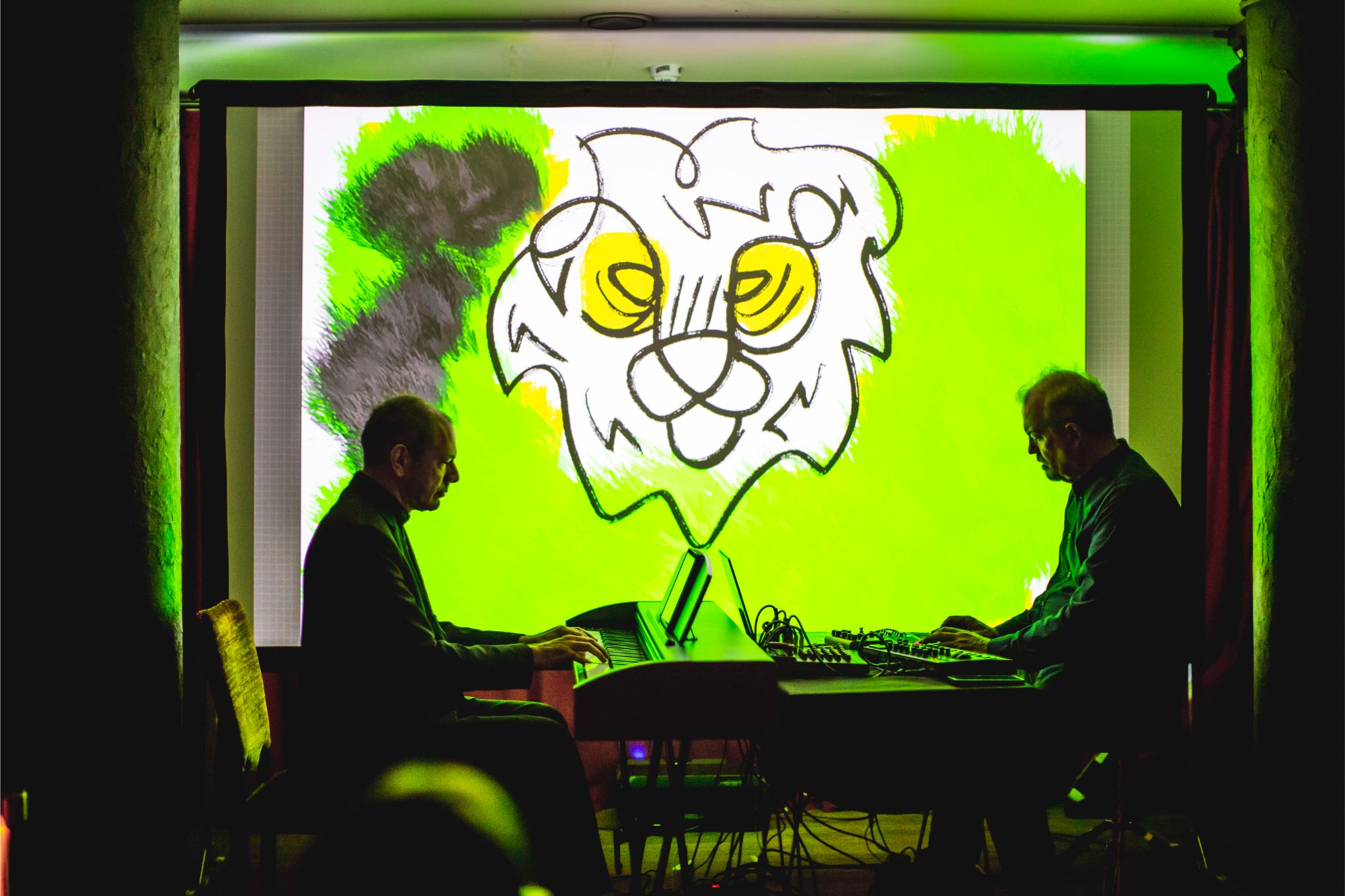
Both projects demonstrated how easily music can move beyond the purely auditory. Electronic textures, acoustic instruments and visual art became parts of a larger experience, where the concert was not defined solely by the music being performed but by the interaction of several artistic languages.
An Orchestra Made of Cars#
Perhaps one of the most unconventional musical ideas in the festival was AUTOTUNED — The Orchestra of Cars, presented at Põhjala tehas on 4 September.
The project challenged the familiar structure of an orchestra by replacing traditional orchestral sections with eight automobiles functioning as sound sources. Positioned around three live musicians, Matteo Ramon Arevalos, Paolo F. Bragaglia, and Arashk Azizi, the cars formed a spatial musical environment through which the audience could move freely. Instead of listening from a fixed seat, visitors encountered the composition from different positions, experiencing changes in balance, texture and perspective as they moved through the space.
The work brought together contributions from several contemporary composers, with compositions designed to coexist within a common sonic language. Music became inseparable from the physical environment, and the conventional relationship between performer, instrument and audience was transformed into something more architectural.
In a festival already open to experiments, AUTOTUNED represented an especially unusual approach. The orchestra was no longer a group of musicians seated onstage, and the concert hall was no longer a room designed for passive listening. The entire space became part of the instrument.
.jpg)
Music as a Multisensory Experience#
Not every musical experiment required advanced technology or unconventional sound systems. Some performances explored familiar experiences from a different perspective.
In The Sound of Wine, composer and pianist Arashk Azizi brought music into the setting of a wine tasting at Heldeke! Tasting Room and Bottle Shop. Presented on 21 August and again on 18 September, the intimate performance explored the relationship between taste and sound, with piano pieces partly composed in advance and partly improvised in response to the character of different wines.
The concept was built around the idea of musical storytelling: translating a flavour, an aroma or an atmosphere into a short piano poem. Rather than separating the act of tasting from the musical performance, the two became connected parts of the same experience, encouraging the audience to pay attention to the relationship between different senses.
Another approach to participation appeared in MANUS: The Invisible Language of Hands, presented on 12 September at the Estonian Theatre and Music Museum. The interdisciplinary work brought together soprano Seren Akyoldaş, tenor Emre Oktayoğlu, pianist Rûbar Dindar and the KeKeÇa Body Percussion Ensemble. Moving between classical vocal music, chanson, jazz, musical theatre and rock, the performance gradually involved the audience in simple rhythmic gestures and body percussion.
The two projects used very different methods, but both questioned the idea that the audience should remain entirely passive. In one, listeners experienced music through taste and imagination; in the other, they became part of the performance through rhythm and physical movement.
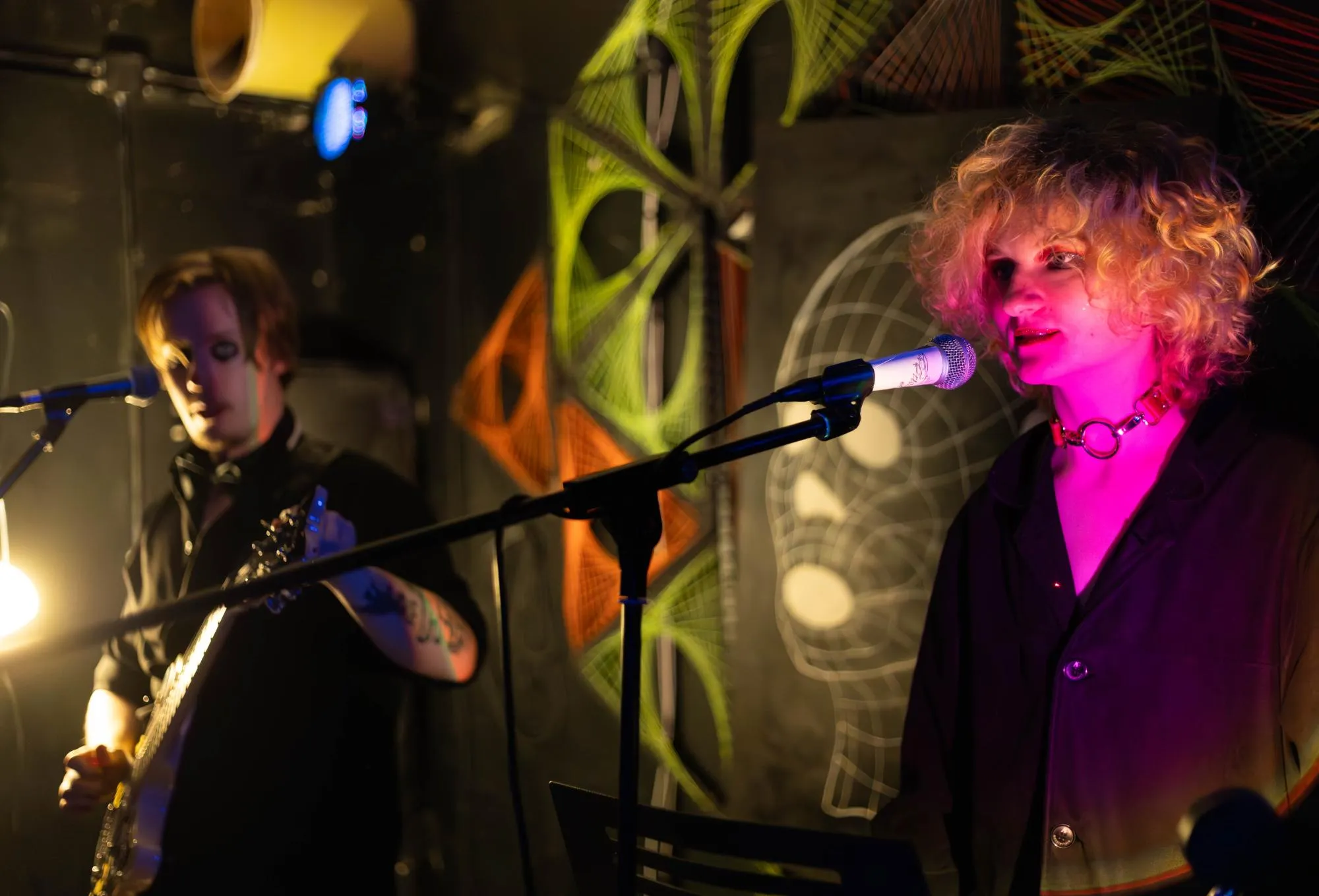
Another example of music crossing the boundaries of traditional performance was Post-Punk Cabaret, presented by Sasha Paris-Carter and Lebo Sibul on 5 September at Kopli Couture. Blending original electric and acoustic music with theatrical storytelling, dark humour and sensual cabaret, the duo explored personal experiences of self-discovery, ambition and the chaotic realities of life, from New York to Narva. The performance was conceived as the first of two connected shows, offering a relatively gentle introduction to the artists' eccentric world before moving into more provocative territory in the second part. Set in the intimate atmosphere of a vintage shop and bar, the sold-out seated show demonstrated how music at Tallinn Fringe could become inseparable from theatrical character, personal narrative and unconventional performance spaces.
.jpg)
From Vinyl Records to Alternative Sounds#
The music programme also made room for less formal encounters with sound. Heldeke Vinyl Sessions, held on three Sundays between 23 August and 6 September, invited participants to bring their own records, share favourite discoveries and listen together. The format moved away from the traditional division between performer and audience, turning musical appreciation itself into a communal activity.
Elsewhere, musicians such as Lebo Sibul and Sasha Paris-Carter brought alternative sounds into the festival, including their appearances at Veino and the genre-crossing Post-Punk Cabaret. Their work connected music with performance, character and theatrical atmosphere, reflecting a wider tendency within Tallinn Fringe to treat genres as flexible rather than fixed categories.
Even a simple dance session could become part of this broader understanding of music. Hour of Wiggle, led by the Invisible Man at Heldeke!, offered an hour of energetic 1990s dance tracks without the need for an all-night party. From experimental composition to familiar records, the programme made room for both serious listening and the uncomplicated pleasure of enjoying music together.
One Festival, Many Ways to Experience Music#
Perhaps the most revealing aspect of the Tallinn Fringe 2026 music programme was the distance between its performances. A contemporary piano sonata inspired by medieval literature could share the festival with an electronic audiovisual experiment, while a jazz quartet performed only a short distance, culturally speaking, from a participatory body-percussion work or an orchestra made of cars.
The differences were not limited to genre. They involved the role of the audience, the relationship between music and other arts, the importance of physical space and even the definition of an instrument. Some performances asked for concentrated listening, others encouraged movement or participation, and still others blurred the distinction between concert, theatre and installation.
That diversity is central to the identity of Tallinn Fringe Festival. Rather than insisting on one definition of musical performance, the festival allows artists to explore their own possibilities and audiences to encounter forms they might not otherwise seek out.
For 31 days, music appeared in museums, jazz clubs, bars, industrial spaces and unconventional venues across Tallinn. It was classical, contemporary, improvised, electronic, theatrical and experimental, sometimes all at once.
And perhaps that was the most interesting thing about the music at Tallinn Fringe 2026: the festival did not merely ask audiences to hear different kinds of music, but to discover different ways of listening.