Dance and Burlesque at Tallinn Fringe 2026
From burlesque at Heldeke! to ballet, clowning and physical theatre, Tallinn Fringe 2026 made movement a form of storytelling.
Dance, physical theatre and circus brought a different kind of energy to Tallinn Fringe 2026. Across intimate venues, theatre stages and the city’s public spaces, performers used movement, gesture, acrobatics and visual comedy to communicate ideas that words alone could not capture. Burlesque was one of the category’s most distinctive attractions, but the programme also moved between classical ballet, absurdist performance, street circus and playful physical comedy.
Burlesque: Glamour, Weirdness and Comic Tease#
One of the clearest highlights was Heldeke! Burlesque – When Life Gives You Lemons. Featuring Ambrosia Starr from Belgium alongside Delfi Oraakel, Oh Ruby and Chaos Crawling, the show brought five different burlesque acts to the Heldeke! stage. Hosted by Katarina von Schatz, the evening promised a mix of classic glamour, unusual characters, sensuality and comic tease, illustrating how burlesque can be as funny and unpredictable as it is seductive.
Burlesque also took a more unconventional turn in Sexy Ghost Boy by New Zealand performer George Fenn. Combining clowning, physical comedy and burlesque, this wordless performance explored the awkward rituals and small anxieties surrounding sex. Rather than relying on dialogue, Fenn used the body, repetition and audience interaction to create a strange, funny and deliberately uncomfortable theatrical experience. The show's return for additional performances later in the festival also demonstrated the appeal of work that refuses to fit neatly into a single genre.
From Classical Ballet to Physical Theatre#
At the opposite end of the spectrum, Erik Satie: Gnossiennes, Piano & Ballet brought together pianist Matteo Ramon Arevalos and ballerina Triinu Upkin. Inspired by the figure of Ariadne and the image of an inner labyrinth, the performance combined live piano, ballet and spoken narration to explore perception, desire, uncertainty and transformation. Instead of telling a straightforward story, it invited the audience to experience music and movement as parts of a shifting psychological landscape.
Physical theatre offered another way to turn everyday experiences into something unexpected. In If I Had an Urn, I Would Try to Fit In!, Rhodé Gerrits and Yasmin Sacha Le Comte played two women who meet in a waiting room, each holding a number and waiting for her turn. What begins as an ordinary encounter develops into a surreal, comic exploration of girlhood, pain, friendship and the frustration of not being heard. Through movement and absurd situations, the performance transforms the familiar experience of waiting into a reflection on who gets attention and who is left behind.
Circus, Clowning and the Joy of Play#
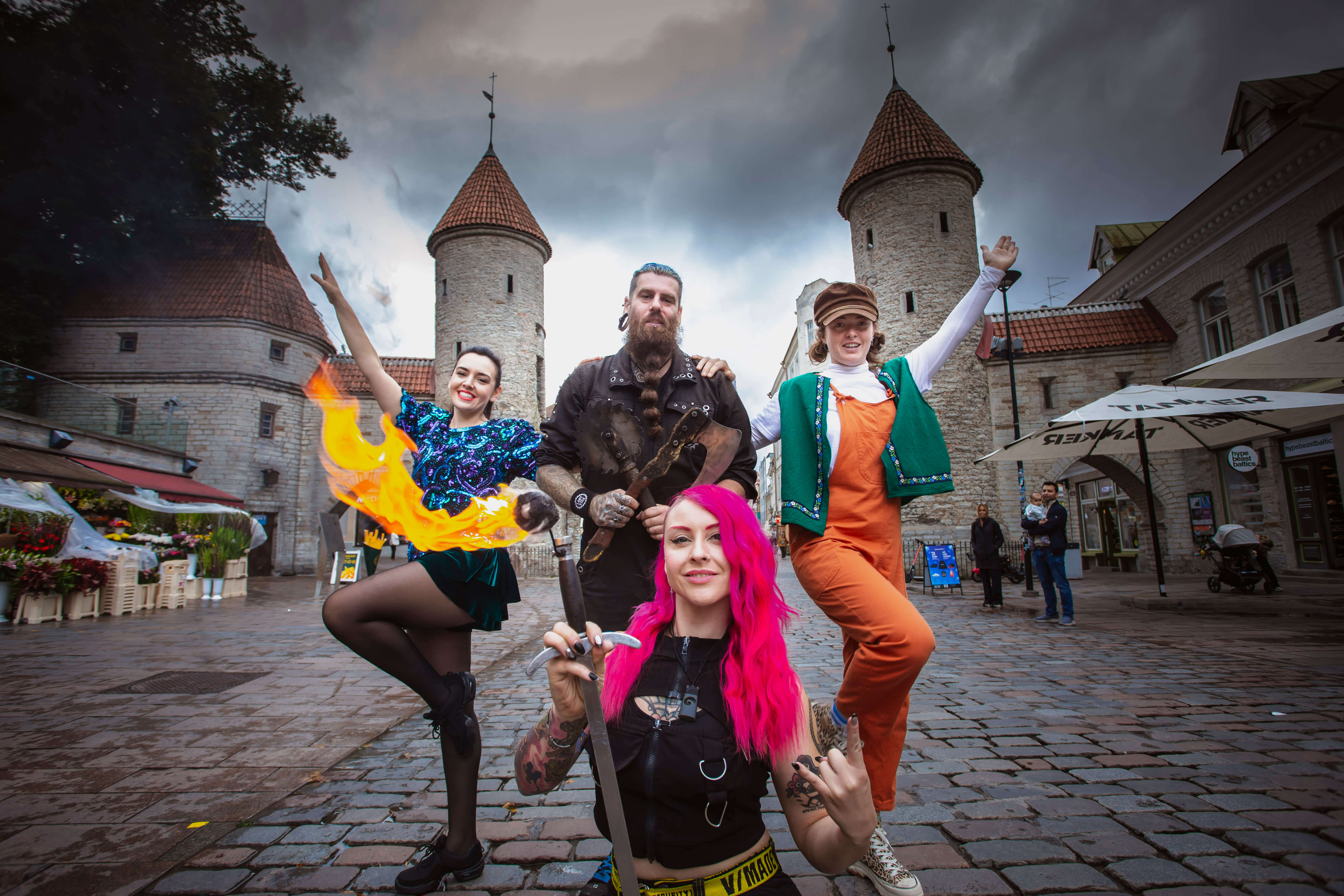
The programme also took physical performance into the streets. The free All Irish Street Showcase brought Logy On Fire, Missy Impossible and Cathy's Céilí Fizz & Chips to Tallinn's Town Hall Square, offering an accessible outdoor programme for families and passers-by. Logy On Fire added a rock ’n’ roll twist to traditional circus and vaudeville, combining juggling, clowning, fire tricks and extraordinary balance skills with plenty of audience participation.
Language became almost irrelevant in Improv Comedy in Gibberish by IMPEERIUM improteater. Built from sounds, emotions, gestures and body language rather than words from any existing language, the performance demonstrated how physical comedy can cross linguistic boundaries. Meanwhile, Sofia Martila's short work SЮDA added another contemporary performance to the programme, with performances listed in Estonian, English and Russian.
The borders between genres were just as fluid in Succulent Circus: Icelandic Cabaret in Tallinn. Bringing together circus, comedy and cabaret, the show demonstrated how physical skills and theatrical spectacle can become part of a larger variety performance. Its presence in more than one festival category reflected the spirit of Fringe itself: many of the most memorable shows resist being defined by a single label.
Movement Without Boundaries#
The Dance, Physical Theatre & Circus programme showed that movement can tell stories, provoke laughter, create intimacy and challenge expectations. Burlesque offered glamour and playful provocation, while ballet explored inner worlds, physical theatre turned everyday situations surreal, and circus transformed skill into spectacle. Together, these performances captured the adventurous spirit of Tallinn Fringe 2026, where the body became a storyteller in its own right and the stage remained open to almost anything.