
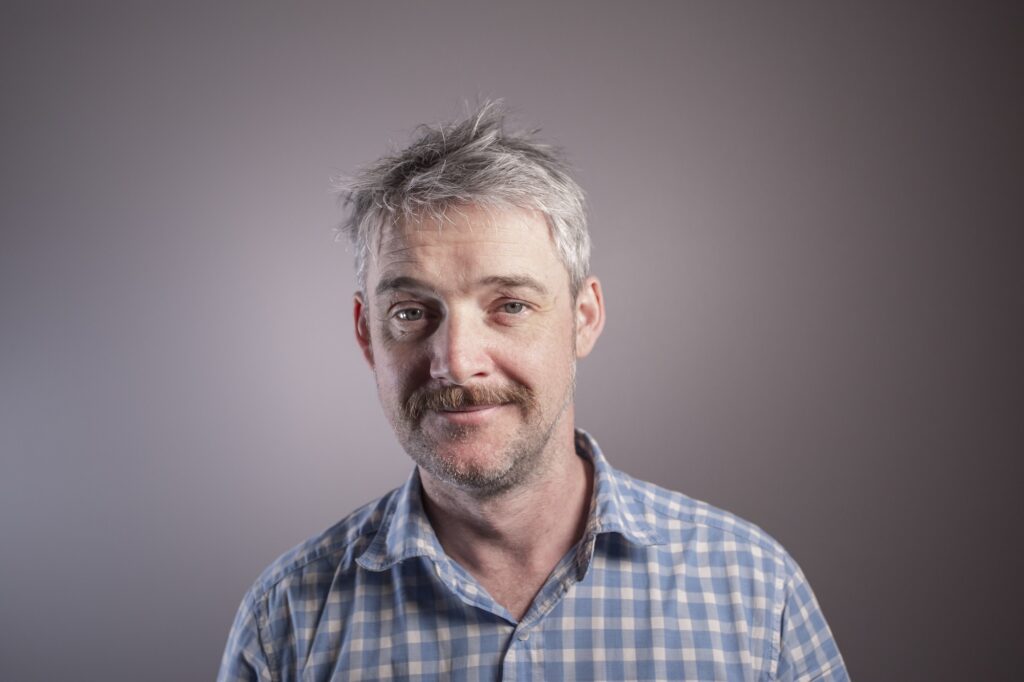
The Tallinn Fringe Festival has officially become a staple of the Estonian alternative arts scene, offering a month-long explosion of uncurated, raw creativity. But how did this movement start, and what does it mean for the local culture? In a recent deep-dive interview by Arashk Azizi for Tunitemusic, the festival’s director and founder, Dan le Man, shared the vision behind the madness. Driven by his own background in circus and physical theatre, Dan has spent the last decade building a platform where independent artists can shine without needing approval from a central board of gatekeepers.
Here is a look at what Fringe represents and how it has grown over the past ten years in Estonia.
Arashk: Can you describe what Fringe is for someone who knows nothing about it?
Dan: Broadly speaking, a fringe festival is a platform where no central organization decides what or who is “good enough” to be in the program. It originated in Edinburgh in 1947 when a group of theatre companies, excluded from the curated Edinburgh Festival, created their own open platform. Today, there are approximately 300–350 fringe festivals worldwide. While some use lotteries or light curation due to capacity constraints, all operate under the shared banner of giving platforms to voices that might otherwise go unheard.
Arashk: From your personal point of view, what does Fringe mean to you? Why did you start it in Estonia?
Dan: I attended the Edinburgh Fringe in the early 2000s as a young emerging artist performing street shows, because no other festival would have accepted me at that stage. The experience was transformative and gave me the best arts education I had ever received. When I moved to Estonia, I recognized that same gap. I started Tallinn Fringe to provide a complementary structure supporting Estonian artists who fall outside the repertory theatre mainstream. My personal measure of success is building a strong, vibrant arts community where art is valued and artists are supported to develop professional careers. It makes me happy to see up-and-coming artists and producers shine.
Arashk: You’ve had Fringe in Estonia for 10 years. How do you see the response from audiences and artists?
Dan: From audiences, the response has been very positive, with consistent growth over the years. Once they engage, they respond well. From artists, the response is also positive, but the consistent challenge is helping them understand that Fringe is fundamentally different from curated festivals. It takes repeated messaging for artists to grasp that participation is their own choice and responsibility. Notably, Tallinn Fringe has achieved a near 50/50 gender split among performers in recent years, providing platforms for female voices that are often underrepresented in our region’s curated festival circuit.